 When one thinks of the Kennedy's, how many of us think of Teddy? Well, maybe I'm thinking of people in MY generation as opposed to those of you currently in high school. Us old folks tend to think of JFK and Bobby -- but how much of our remembrances are centered around their assassinations rather than their leadership or their impact on legislation? In actuality, Teddy, as a longtime leader in the Senate (the longest-serving in American history) until his death this past August, had perhaps the most enduring impact on social and political policies of all the Kennedy's. Throughout his early life he had his brothers' popularity to live up to (and sometimes to overcome).
I haven't read many biographies lately -- and only picked this one up because my two Book Clubs are doing it. But I am very much enjoying it! A co-writer is not mentioned (though my skeptical self wonders about a possible staff of ghost writers), and I was impressed at the writing style - how the chapters are organized and titled, and the way he told the stories of his childhood, education, and policial life - and how he told of coming into his own. He admitted using lots of notes, letters, and other sources to remind himself of dates, speeches, and so on, and those details added a lot to the writing -- but the strength of the book comes from his personal voice, which is self-deprecating and honest. His references to his parents are unfailingly loving and admiring -- the same with his references to other family members. He gives perspectives on his colleagues which provide a behind-the-scenes look at the daily life of a legislator. I found that enlightening, and gave me an admiration for the work that they do. He readily admits without excuses some of his escapades, which led to my trust when he insisted that some things of which he has been accused (Chappaquiddick) did not happen the way the media portrayed them. (for example, he was kicked out of Harvard for a year when he allowed a friend to take his Spanish final, an impulsive mistake that he confesses and regrets.)
He knows that his family has a lot of money, and we readers can easily see how that money provides some great opportunities, as in travel and education, as well as the THINGS - homes, boats, and so on. He probably takes those things for granted to some extent, but he also clearly outlines the high standards and expectations to which he and his siblings are held. "Of those who have plenty, much is expected." While growing up, they were expected to be well-prepared for dinnertime conversations on a variety of topics (announced daily via a notecard on the hallway bulletin board) from the situation in Uganda to possible solutions to the hunger crisis. Over the years this very public family suffered tragedy again and again - of the 9 children, Joe, Jack, Bobby, Kathleen all died early; Rosemary's mental problems were increased as a result of a faulty surgery; and Teddy's oldest son had a childhood cancer which resulted in amputation of a leg. Throughout it all, Kennedy maintained his positive attitude of hope, belief in the basic goodness of people, and the conviction that if we all work hard enough for justice, society as a whole will benefit. The many photographs scattered throughout the book help to remind we readers that these larger-than-life people were real. The names we know from history were down to earth family people facing many of the same issues as the rest of us, enjoying holidays and special events with their family, laughing together -- just like us. It's easy to forget, in the stories and the pictures, just how different their situation has been. What a fun close-up of the lives of the Rich and the Famous.
Because I learned so much and enjoyed the writing style, I give this book 3 1/2 stars out of 4





 It has been quite a while since I updated my reading list, but that doesn't mean that I haven't been reading. This past month I've tackled a variety of book topics and genres (as you can see from the images uploaded to this post). I LOVED This I Believe - was inspired and awed by the quality of writing by people famous and not-famous. This book originated with a radio series in the 1950's, during a time of upheaval, disillusionment, mistrust, and cynicism (sound familiar?) A group of guys decided to invite people to focus on what they DO believe in, what their hopes and dreams are, and on what basis they make daily decisions as they live their lives. The resulting essays were read aloud (by the writers themselves) and played on a radio show --- which was revived just a few years ago. I was amazed that anyone could condense their world view into a couple hundred words (how would one decide on just-one-principle to write about?) The language/vocabulary/sentence structure was more complex in the 1950's essays than in the 21st century essays (what does that say about our declining willingness to challenge ourselves intellectually?) But the people are the same - and the struggles which we all face are universal. I made a vow to write my OWN "This I Believe" essay by the end of the school year.


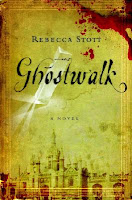 I know, I know, this is the wrong month for ghost stories, but this is the book selected by the teacher's book club for February. To appease those who insist on love stories for Valentine's Day, this is also a love story -- but not your ordinary kind. Writer Lydia Brooke agrees to complete the unfinished book after her ex-lover's mother dies unexpectedly. She moves into his mother Elizabeth's house and is soon enmeshed in research on the life and career of Sir Isaac Newton, the subject of the unfinished book. Sure enough, Lydia and the married Cameron soon resume their affair, but they both have many secrets. Cameron, a scientist who develops pharmaceuticals in a lab where they use rats for their trial experiments, is always in danger from an animal rights terrorist group -- but he doesn't tell Lydia about the true purpose of the drugs he's developing, nor of his involvement with a world-wide group pulling the strings. Lydia, conducting research on Trinity at Cambridge University in the 17th century, doesn't share information about the mysterious lights that appear in his mother's house, the odd disappearances, the man in a red cape she keeps seeing just out of the corner of her eye, nor the woman who approaches her to channel the spirits of contemporaries of Newton who died in unexplained ways.


