
(This book takes place in contemporary Jeddah, a coastal city in Saudi Arabia.) Nouf ash-Shrawi, 16, disappears 3 days before her wedding. A truck and a camel disappear, too. She comes from a wealthy family, and her brother Othman asks his old friend Nayir, a desert guide, to find her. After a couple of weeks Nouf's body is found. When Nayir goes to the coroner's office to claim the body for the family, he overhears an argument between two people: the coroner and a lab assistant, Katya. Nayir, devout and modest, is horrified to see a woman who is unveiled working where she might be with men. But when the police officially close Nouf's case, citing an accidental death by drowning, Nayir and Katya end up working together to track down some unexplained details - things that Nayir couldn't understand about the crime scene, and things that Katya noticed during the autopsy that are being swept under the rug.
What I loved about this book was the realistic way it portrayed the lives of both men and women in a modern and changing Mideastern world -- in a country that is caught between preserving the "old ways" that have identified their culture and the new ideas brought through commerce and communication with the rest of the world. What is one to think about a woman who doesn't recognize that those traditions and rules that were intended to protect her, but rather sees them as stifling? Nayir, who has no experience with women (he is an only child who was raised by his elderly uncle), feels that he is putting his soul at risk as he pursues the truth for the sake of his good friend Othman -- even if it means violating society's rules about men and women being alone together.
This book develops its characters well as it describes the culture and society without judgement. It's also a page-turning mystery. If you like this book, you will probably also like its sequel, City of Veils.
4 out of 4 stars!


 Jerk, California


 It has been quite a while since I updated my reading list, but that doesn't mean that I haven't been reading. This past month I've tackled a variety of book topics and genres (as you can see from the images uploaded to this post). I LOVED This I Believe - was inspired and awed by the quality of writing by people famous and not-famous. This book originated with a radio series in the 1950's, during a time of upheaval, disillusionment, mistrust, and cynicism (sound familiar?) A group of guys decided to invite people to focus on what they DO believe in, what their hopes and dreams are, and on what basis they make daily decisions as they live their lives. The resulting essays were read aloud (by the writers themselves) and played on a radio show --- which was revived just a few years ago. I was amazed that anyone could condense their world view into a couple hundred words (how would one decide on just-one-principle to write about?) The language/vocabulary/sentence structure was more complex in the 1950's essays than in the 21st century essays (what does that say about our declining willingness to challenge ourselves intellectually?) But the people are the same - and the struggles which we all face are universal. I made a vow to write my OWN "This I Believe" essay by the end of the school year.

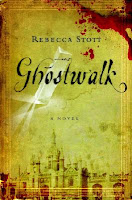 I know, I know, this is the wrong month for ghost stories, but this is the book selected by the teacher's book club for February. To appease those who insist on love stories for Valentine's Day, this is also a love story -- but not your ordinary kind. Writer Lydia Brooke agrees to complete the unfinished book after her ex-lover's mother dies unexpectedly. She moves into his mother Elizabeth's house and is soon enmeshed in research on the life and career of Sir Isaac Newton, the subject of the unfinished book. Sure enough, Lydia and the married Cameron soon resume their affair, but they both have many secrets. Cameron, a scientist who develops pharmaceuticals in a lab where they use rats for their trial experiments, is always in danger from an animal rights terrorist group -- but he doesn't tell Lydia about the true purpose of the drugs he's developing, nor of his involvement with a world-wide group pulling the strings. Lydia, conducting research on Trinity at Cambridge University in the 17th century, doesn't share information about the mysterious lights that appear in his mother's house, the odd disappearances, the man in a red cape she keeps seeing just out of the corner of her eye, nor the woman who approaches her to channel the spirits of contemporaries of Newton who died in unexplained ways.


